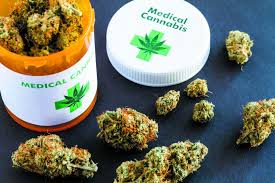
Pain is a common symptom of cancer, and many affected patients do not receive adequate pain relief. In light of rapidly evolving marijuana legislation and a growing opioid epidemic, a team led by Jona Hattangadi-Gluth, MD, and Kathryn Ries Tringale, MD, MAS, of the University of California, San Diego, examined trends in the self-disclosed use of marijuana and opioids among patients with cancer.
After analyzing data from the U.S. National Health and Nutrition Examination Survey between 2005 and 2014, the investigators matched 826 people with cancer to 1,652 controls without cancer. Among survey respondents who had cancer, 40.3 percent used marijuana within the past year, compared with 38.0 percent of respondents without cancer. Also, people with cancer were more likely to use prescription opioids than their demographically equivalent counterparts without cancer (13.9 percent versus 6.4 percent).
“Prospective clinical trials are needed to quantify the efficacy of marijuana in cancer-specific pain as well as the risk of opioid misuse in this patient population,” said Dr. Tringale.
When looking at rates of marijuana and opioid use in more than 19,000 survey respondents with and without cancer over 10 years, the researchers found significantly increased use of marijuana over time — likely reflecting increased availability due to legislative changes — but they found stable rates of opioid use. A diagnosis of cancer did not significantly affect the odds of substance use over time from 2005 to 2014.
“Medical marijuana legalization has previously been associated with a reduction in hospitalizations related to opioid dependence or abuse, suggesting that if patients are in fact substituting marijuana for opioids, this may introduce an opportunity for reducing opioid-related morbidity and mortality,” said Dr. Hattangadi-Gluth. “Of course, it will also be important to identify risks and adverse effects of marijuana, which has not previously been studied on large randomized clinical trials, given its scheduling as a class 1 controlled substance.”
Since a policy change in November 2018, specialist doctors registered with the General Medical Council (GMC), have been permitted to prescribe new medicines which derive from cannabis. Yet, research into these products has, to date, been limited creating an ‘information vacuum’ about these medicines, their benefits or harms.
A new review authored by leading scientists and clinicians from the University of Bath and University College London (UCL) points to the array of different cannabis-based products and cannabinoids available, and a clear need to educate both patients and clinicians into what these different products do and how they might help.
In particular, it points to important differences between products containing THC (the main psychoactive and intoxicating constituent of cannabis) versus CBD (the non-intoxicating element). Although in certain medicines CBD and THC are combined for clinical benefit, in others these components can work independently, playing different roles in improving certain symptoms.
For example, several studies have found that a combination of THC and CBD can alleviate symptoms of chronic pain, while CBD alone may be effective for treatment-resistant epilepsy. By contrast THC alone may be effective for treating nausea and vomiting caused by chemotherapy. THC and CBD are both ‘cannabinoids’ that act in different ways on the body’s endogenous cannabinoid system.
The cannabis plant produces over 144 different cannabinoids such as THC or CBD. Some medicinal products contain THC and/or CBD derived from the cannabis plant, while others contain synthetically produced cannabinoids. CBD is also available in non-medicinal products such as oils and tinctures.
Lead author, Dr Tom Freeman of the University of Bath’s Addiction and Mental Health Group explains: “In this complex and rapidly evolving field, there are several different cannabis-based and cannabinoid medicinal products. These differ in their THC and CBD content, who can prescribe them, and the conditions they may be used to treat. Here we provide an update for clinicians in advance of forthcoming NICE guidelines.
“A key message is that CBD products widely sold online and in health food shops lack quality standards and should not be treated as medicinal products.”
Research on cannabis was previously restricted because it was listed in Schedule 1, implying that it had no medical value. Cannabis was recently moved to Schedule 2 in the UK.
Dr Freeman adds: “Research on unlicensed cannabis products has been limited to date. The rescheduling of cannabis and allocation of dedicated UK research funding will improve the evidence we have to guide clinical decision-making.”
Co-author, Dr Michael Bloomfield Head of Translational Psychiatry at University College London (UCL) added: “There have been leaps and bounds in our scientific knowledge in recent years, which combined with confusing claims about the medicinal uses of these drugs can be potentially perplexing for doctors and patients. We hope that our new guidance is helpful to doctors and patients worldwide. Much more research is needed into this new class of medicine.”
Co-author Dr Chandni Hindocha of the Clinical Psychopharmacology Unit at UCL added: “Resources must be made available to update and educate clinicians about cannabis and cannabinoid based medicines. We would like to encourage doctors to maintain a compassionate and evidence-based approach when engaging with their patients in this rapidly developing field, in order to provide the best standard of care.”
 Marijuana News